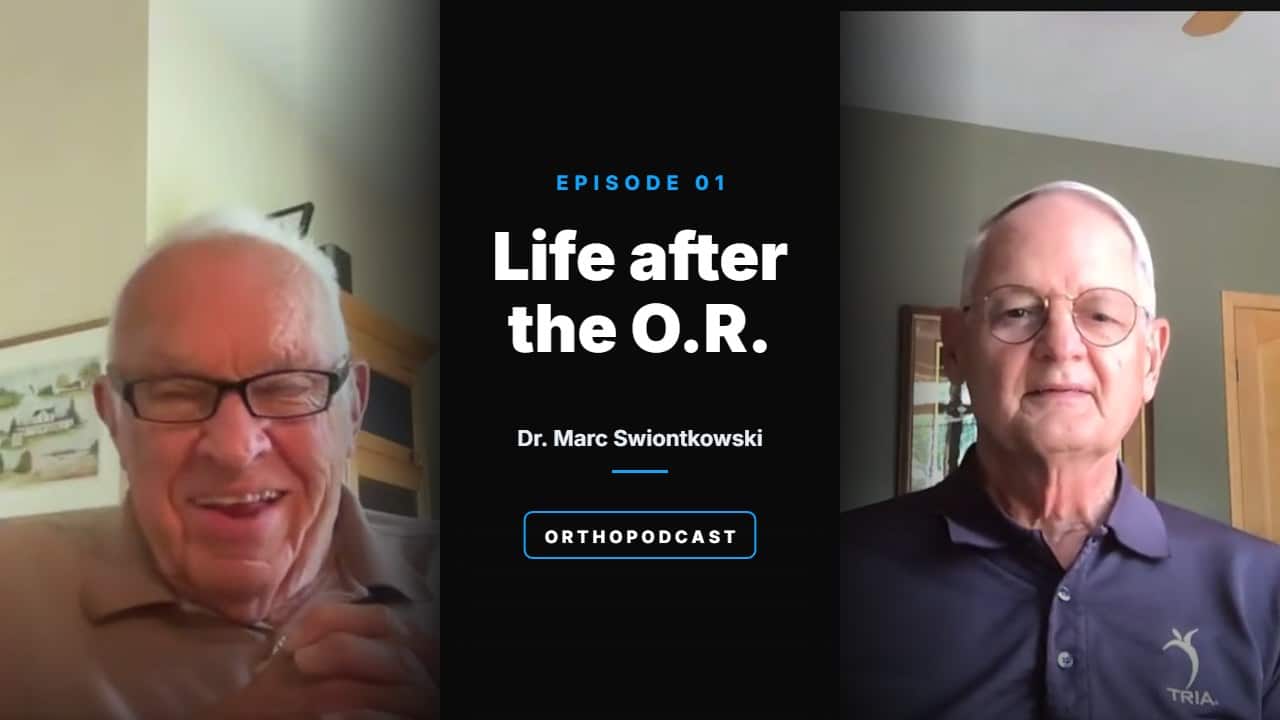
Retirement from orthopedic surgery is rarely as simple as stopping clinical practice. For surgeons who have spent decades caring for patients, teaching, conducting research, and building their professional identities, stepping away can raise a much bigger question: What comes next?
For some orthopedic surgeons, retirement creates the time to study medicine again, pursue research, mentor younger physicians, or develop interests that were difficult to prioritize during a demanding clinical career. The transition can be challenging, but it can also open an entirely different phase of professional life.
Why retirement can feel unfamiliar to an orthopedic surgeon
Clinical practice leaves little time to step back and think about medicine as a broader field.
During an active surgical career, much of a physician’s attention is devoted to the immediate demands of patient care. There are patients to see, operations to plan, schedules to manage, and cases to think about after leaving the hospital or office. The science behind medicine can become something physicians engage with primarily in the context of the individual patient in front of them.
Once that routine disappears, there can be a surprising amount of mental space.
One physician in the discussion described being about a year into retirement and rediscovering the enormous amount of medical information that exists, as well as everything that remains to be learned. Without the pressure of grades, teaching requirements, or clinical responsibilities, studying medicine again can become an enjoyable intellectual pursuit.
That shift matters because retirement does not necessarily mean an end to intellectual engagement with medicine.
For some surgeons, it may be the first opportunity in decades to explore the field on their own terms.
Retirement does not have to mean leaving medicine behind
An orthopedic surgeon can stop operating without stopping being a physician in every meaningful sense.
The conversation offers several examples of what that can look like. Research, mentoring, teaching, professional organizations, peer review, editorial work, and advising younger investigators can all provide ways to remain connected to medicine after clinical responsibilities begin to wind down.
One surgeon described a gradual transition in which surgical volume decreased while other responsibilities remained. After decades in academic orthopedics, his planned transition included stopping surgery while continuing to see appropriate patients, participate in research, mentor younger surgeons, and follow patients he had previously treated.
That gradual approach can make the transition very different from simply walking away one day.
It also allows an experienced surgeon to decide which parts of professional life are still meaningful and which parts have become physically or mentally difficult.
Professional identity can become part of the retirement decision
One of the hardest parts of retirement may have little to do with a schedule.
It can be about identity.
The discussion includes a story about a physician who left medicine for a successful career in real estate but later admitted that he missed being known as a doctor. Another story involved a former professional athlete who struggled with the question of who he was after his playing career ended.
The underlying issue is familiar across high-level professions. When a person’s career has occupied a central place in their identity for decades, removing that role can create an unexpected sense of uncertainty.
Orthopedic surgeons may be particularly familiar with this problem because clinical practice can become deeply intertwined with daily life, professional relationships, reputation, and purpose.
That does not mean a surgeon needs to keep operating indefinitely.
It means the transition deserves thought before clinical practice ends.
Start planning for retirement long before you stop operating
The strongest advice from the conversation is to begin thinking about the transition much earlier than retirement itself.
One participant suggested that orthopedic surgeons should begin planning around 20 years into their careers rather than waiting until the 30th or 40th year. The goal is not to create a rigid retirement date. It is to develop interests and opportunities outside clinical practice while there is still plenty of time to explore them.
That planning can include two different areas.
Develop interests outside medicine
A surgeon’s life does not need to revolve entirely around orthopedics.
Hobbies, physical activities, family interests, and other pursuits can provide an important foundation for life after clinical practice. In the discussion, golf, cycling, baking bread, and separate interests between spouses were examples of activities that could continue beyond medicine.
These interests may seem unrelated to retirement planning, but they become much more important when the demands of clinical practice disappear.
A surgeon who already has meaningful activities outside medicine has more places to direct time and attention when the operating room is no longer part of the weekly routine.
Identify ways to remain involved in medicine
The second part is deciding what professional involvement still matters.
The discussion identifies several possibilities:
- Clinical research and research design
- Mentoring younger surgeons and investigators
- Reviewing peer-reviewed literature
- Serving on editorial boards
- Participating in specialty societies
- Providing experience and perspective to younger physicians
- Continuing appropriate patient relationships during a transition period
- Exploring administrative or other professional roles
The right combination will differ from one surgeon to another. The important point is to think about these options before they are needed.
Experience does not disappear when clinical practice ends
Decades spent in orthopedic surgery produce something that cannot be quickly replaced: experience.
One physician described his knowledge in research and clinical orthopedics as something that should remain accessible to people who can benefit from it. His concern was not that his experience was uniquely valuable, but that younger physicians and investigators can benefit from thoughtful advice from people who have already spent decades in the field.
That creates an important distinction between retiring from a job and retiring from a profession.
A surgeon may stop taking call, stop operating, or significantly reduce patient care while continuing to contribute through mentorship, research, education, or professional service.
For many experienced physicians, that contribution may become one of the most satisfying parts of the transition.
One surgeon described his greatest professional reward as seeing people he had mentored continue practicing high-level, ethical care and keeping patients first rather than becoming focused only on the business side of orthopedics.
A gradual transition can create more options
Retirement does not necessarily have to be an abrupt event.
For physicians who want to continue contributing, a gradual reduction in clinical responsibilities can provide time to determine what comes next. In the discussion, one surgeon described moving from hundreds of operations each year to roughly 100 to 110 cases annually before planning to stop surgery while continuing other professional activities.
Another described a transition in which he would stop performing surgery but continue seeing appropriate nonsurgical patients, referring surgical cases to younger colleagues when necessary.
These examples show that “retirement” does not have to mean one universal change.
It can mean changing the type of work you do.
For an orthopedic surgeon, that could involve reducing the physical demands of surgery while retaining opportunities to teach, research, mentor, or contribute professionally.
Life after orthopedic surgery can still be active
Retirement can also create room for activities that were difficult to prioritize during a demanding surgical career.
Physical limitations may influence what those activities look like. One surgeon discussed longstanding sports injuries and the physical demands of trauma surgery, including the pain associated with the force and repetitive activity involved in operating. At the same time, he continued to pursue cycling and golf.
Another physician described remaining mentally active after retirement, continuing to study medicine and pursue innovation.
The point is not that every retired orthopedic surgeon should follow the same path.
The point is that the end of clinical practice can create room for a different kind of activity, both professionally and personally.
What orthopedic surgeons can do before retirement
A successful transition is easier to plan when it starts well before the final day of clinical practice.
Based on the experiences discussed in the conversation, orthopedic surgeons approaching retirement can consider:
- Start thinking about the transition early. Do not wait until the final years of a career to ask what comes next.
- Build interests outside medicine. Develop activities and relationships that are meaningful independently of your professional role.
- Decide what parts of medicine you want to keep. Research, mentoring, education, professional organizations, and literature review may offer different ways to remain involved.
- Consider a gradual reduction in clinical responsibilities. A phased transition may provide more time to determine what type of professional involvement remains satisfying.
- Think about how your experience can help others. Decades of clinical and academic experience can be particularly useful to younger physicians and researchers.
- Separate professional identity from professional activity. Stopping surgery does not mean losing everything that made the career meaningful.
- Revisit the plan regularly. The discussion recommends treating the process as something to reconsider every five to 10 years until there is a clear plan.
Frequently asked questions about retirement for orthopedic surgeons
When should an orthopedic surgeon start planning for retirement?
The discussion recommends beginning to think seriously about the transition around 20 years into an orthopedic career rather than waiting until the final years of practice. The plan can be revisited periodically as interests and circumstances change.
Can an orthopedic surgeon retire from surgery but remain involved in medicine?
Yes. The discussion describes research, mentoring, teaching, professional organizations, literature review, and other forms of professional contribution as potential ways to remain connected to medicine after stopping surgery.
Why can retirement be difficult for physicians?
A physician’s professional identity can become deeply connected to their sense of purpose. When clinical practice ends, some physicians may have to adjust to a different understanding of who they are and how they contribute.
Is it better to retire from orthopedic surgery gradually?
The experiences in the discussion suggest that a gradual reduction can allow physicians to shift toward other activities while still maintaining a professional connection to medicine. However, the appropriate transition will differ for each physician.
What can retired orthopedic surgeons do with their medical experience?
The source describes opportunities including research, mentoring, peer review, editorial work, specialty society involvement, and advising younger physicians and investigators.
Should orthopedic surgeons develop hobbies before retirement?
The discussion strongly emphasizes having interests outside medicine. Examples included golf, cycling, baking, and other personal pursuits that can continue after clinical responsibilities decrease.
Can retirement from clinical practice be intellectually rewarding?
It can be. One physician described retirement as an opportunity to return to studying medicine without the pressure associated with grades, teaching responsibilities, or clinical work.
How can orthopedic surgeons continue helping younger physicians after retirement?
Mentoring is one of the clearest options discussed. Experienced surgeons can continue supporting younger investigators and physicians through research guidance, professional connections, and the perspective gained through decades of practice.
There is life after orthopedics
Retirement from orthopedic surgery does not have to mean abandoning the profession, the knowledge accumulated over a career, or the relationships built along the way.
For some surgeons, it may mean finally having time to study, innovate, mentor, pursue research, or explore interests outside medicine. For others, it may mean stepping away completely from clinical work while finding an entirely different way to spend the years ahead.
The common thread is planning.
A career in orthopedic surgery can last decades. The transition afterward deserves the same thoughtfulness. As the discussion makes clear, there can be a meaningful professional and personal life after clinical practice, particularly when surgeons begin considering that next chapter well before they are ready to stop operating.