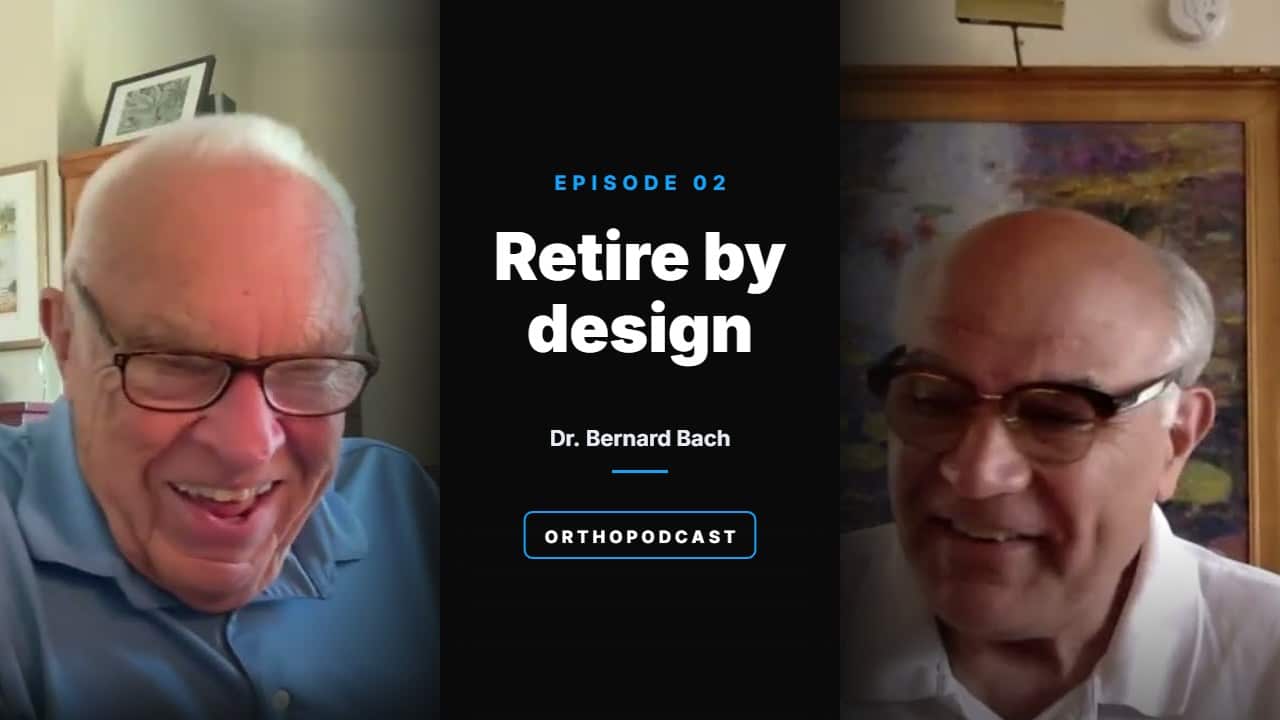
Retirement can be one of the biggest transitions in an orthopedic surgeon’s career. After decades of clinical practice, surgery, teaching, research, leadership, and patient relationships, walking away from medicine involves much more than deciding whether you have enough money.
In a conversation with Dr. Bernard “Bernie” Bach, we discussed what life after orthopedic surgery can look like and why retirement planning needs to begin well before the final day in the operating room. His perspective is simple: retirement should be designed intentionally rather than left to circumstance.
For orthopedic surgeons considering that transition, Dr. Bach offers a practical framework that goes beyond finances.
Retirement planning for orthopedic surgeons starts with the life you want afterward
Dr. Bach developed his own framework around several factors that influenced his decision to retire. He described them as time, health, education, his wife, and money.
He also considered practical lifestyle factors, including access to health care, a convenient airport, recreation, culture, and proximity to family. His point was that having enough money to retire is only one part of being prepared for retirement.
That distinction matters for surgeons because the question is not simply, “Can I stop working?”
The better question is, “What do I want my life to look like when I stop practicing?”
Dr. Bach recognized that some of the activities he enjoyed might become more difficult with age. His decision was influenced by the desire to have enough time and physical ability to enjoy those activities while he could.
That is an important consideration for any surgeon who has spent decades postponing travel, hobbies, family time, or other interests because of the demands of practice.
Your professional identity can make retirement difficult
One of the most significant challenges Dr. Bach discussed was identity.
For orthopedic surgeons, professional identity can become deeply connected to being a physician and surgeon. Lanny Johnson, M.D. shared a story about a former professional baseball player who struggled after losing the identity associated with his career. Dr. Bach agreed that physicians can face a similar challenge when they stop practicing.
Retirement therefore requires an emotional plan as well as a financial one.
Dr. Bach said he felt ready to retire because he had accomplished the professional goals he had set for himself. He had completed the parts of his career that mattered to him, including patient care, surgery, research, writing, mentoring, and leadership. He felt he had checked off his professional boxes.
That sense of completion helped make the transition easier.
For another surgeon, the answer may be different. Retirement is a personal decision, and what works for one physician may not work for another.
Consider your health and mobility before deciding when to retire
Age alone does not determine whether someone is ready for retirement. Health and mobility can have just as much influence.
Dr. Bach talked about how his physical abilities changed over time. Activities that had once been easy became more difficult, which made him think carefully about what he wanted to be able to do during retirement.
That led to an important observation: waiting longer to retire may provide additional working years, but it can also mean having fewer years when certain activities are physically realistic.
His experience during the COVID-19 pandemic also gave him an unexpected preview of retirement. When elective surgery was paused, he found that woodworking, gardening, and other activities kept him occupied. The experience gave him some insight into what life outside clinical practice could look like.
For surgeons, that raises a practical question: What will fill your time when medicine no longer does?
Include your spouse and family in the retirement conversation
Retirement affects more than the physician.
Dr. Bach discussed how his wife’s health, his children’s lives, family commitments, and their plans as a couple influenced his thinking. His retirement decisions were not made independently of the people closest to him.
This becomes particularly important when considering where to live and how to spend time after practice.
A surgeon may imagine retirement involving extensive travel, a second home, or a move closer to family. Those plans may look very different when a spouse’s preferences, children’s schedules, grandchildren, or other family responsibilities are considered.
The earlier these conversations happen, the fewer surprises there are later.
Start financial planning well before retirement
Financial preparation was another major part of Dr. Bach’s approach.
He recommended establishing a relationship with a financial planner early in an orthopedic career rather than waiting until retirement is approaching. In his view, a financial planner can help establish short-, intermediate-, and long-term goals and keep the overall plan on track.
He also emphasized understanding how the financial professional is compensated and whether the planner has fiduciary responsibilities.
His philosophy became more conservative as retirement approached. Instead of trying to make exceptionally large investment gains, he described the goal as protecting the money that had already been accumulated.
For an orthopedic surgeon, retirement planning can involve decades of income, investments, practice ownership, education expenses, housing decisions, and lifestyle costs. Starting early gives you more time to understand those moving parts.
Review your orthopedic practice agreement before retirement
One of the most practical portions of the conversation focused on the surgeon’s practice contract.
Dr. Bach recommended thinking through what happens to several parts of the practice relationship when a surgeon retires. These can include:
- Any age or retirement provisions affecting clinical practice
- Accounts receivable
- Post-retirement benefits
- Group ancillary investments
- Patient calls and referrals
- Depositions and independent medical evaluations
- Continuing obligations after retirement
- Malpractice coverage and tail coverage
Dr. Bach said his own practice had a thorough contract that outlined what would happen after retirement, including how certain subsequent deposition work would be handled.
He also discussed the importance of understanding malpractice coverage if a retired surgeon later decides to return to clinical practice. The specific terms of a retirement agreement will vary by practice and situation, so surgeons should understand their own contracts before making decisions about leaving or returning.
The larger lesson is straightforward: retirement planning should include the details of how you leave your practice, not just the date you stop operating.
Think about where you will live and what retirement will cost
Housing can become a significant retirement consideration.
Dr. Bach described how the costs of maintaining a large home, including property taxes and ongoing maintenance, influenced his own decision to make a change. He also discussed the appeal of a “lock and leave” type of setting for people who expect to travel during retirement.
That is worth considering before retirement rather than after.
The home that made sense for a working surgeon may not be the home that makes sense when you are traveling frequently or spending significant time elsewhere.
Retirement planning should therefore account for the full lifestyle, including housing, travel, transportation, health care, family commitments, and the activities you expect to pursue.
Build a life that gives you somewhere to go after practice
A successful retirement does not necessarily mean completely disconnecting from medicine.
Dr. Bach maintained professional relationships after retirement. He continued attending professional meetings and staying connected with colleagues and former fellows. Those relationships remained meaningful even though he was no longer practicing clinically.
At the same time, retirement gave him room for activities outside medicine.
He discussed woodworking, gardening, travel, reading, cultural activities, walking, and spending time with friends and family. He also described being able to do things during his first years of retirement that he might not have been physically able to do later.
That balance is worth thinking about.
You do not have to erase your professional identity when you retire. You can maintain the relationships, interests, teaching, mentorship, or professional activities that still bring meaning to your life while leaving the clinical responsibilities behind.
What orthopedic surgeons can learn from Dr. Bach’s retirement experience
Dr. Bach’s experience reinforces a central idea: retirement is easier to approach when you have already thought through what comes next.
The financial side matters, but so do your health, relationships, professional identity, practice agreement, housing, and daily activities.
His experience also demonstrates that there is no universal retirement age or single definition of retirement. The right decision depends on the individual surgeon and the life he or she wants to build afterward.
Frequently asked questions
When should orthopedic surgeons start planning for retirement?
Dr. Bach recommended establishing a relationship with a financial planner within the first five years of practice rather than waiting until retirement is approaching. His broader approach also suggests that surgeons should think about retirement as a long-term life plan, not a decision made shortly before leaving practice.
What makes retirement difficult for orthopedic surgeons?
Professional identity can be a major challenge. Surgeons may spend decades identifying themselves through their clinical work, patient relationships, leadership, and professional accomplishments. Dr. Bach discussed the importance of feeling that he had completed the professional goals that mattered to him before retiring.
Should my spouse be involved in retirement planning?
Yes. Dr. Bach discussed his wife’s health and their plans as a couple as part of his own retirement decision. Retirement affects household finances, housing, travel, family commitments, and daily life, so those decisions should be discussed together.
What should an orthopedic surgeon review in a practice contract before retiring?
The conversation with Dr. Bach identified several areas worth reviewing, including retirement provisions, accounts receivable, post-retirement benefits, ancillary investments, patient referrals and calls, deposition obligations, independent medical evaluations, and malpractice coverage.
How can surgeons prepare emotionally for retirement?
Dr. Bach’s experience suggests that surgeons should think about identity and purpose before leaving clinical practice. Having interests outside medicine and maintaining meaningful professional relationships can make the transition more manageable.
Does retirement mean an orthopedic surgeon has to completely leave medicine?
No. Dr. Bach continued attending professional meetings and maintaining relationships with colleagues and former fellows after retiring clinically. Retirement can mean leaving clinical practice while still participating in professional activities that remain meaningful to you.
What should surgeons do if they are unsure whether they are ready to retire?
Dr. Bach emphasized that retirement is a personal decision. A surgeon can evaluate professional goals, health, mobility, finances, family circumstances, and the life they want to lead after practice before deciding when the timing is right.
Why should surgeons think about retirement before they are ready to stop practicing?
Early planning gives surgeons more time to prepare financially and professionally while also considering what life will look like after clinical practice. Dr. Bach’s approach demonstrates that retirement planning involves much more than reaching a particular age or financial milestone.
What to do next
If retirement is somewhere on your horizon, consider starting with these questions:
- Have I accomplished the professional goals that matter most to me?
- What will give my days structure after I stop practicing?
- What activities do I want to be physically able to enjoy?
- Have my spouse and I discussed what retirement will look like?
- Do I have a long-term financial plan?
- Have I reviewed the retirement provisions in my practice agreement?
- What happens to my professional obligations after I leave clinical practice?
Dr. Bach’s central message is worth remembering: life after orthopedics should be planned by design, not by default.
For orthopedic surgeons, preparing for that transition can start years before the final patient or final operation. The earlier you think through the financial, professional, physical, and personal pieces, the more intentional the next chapter can be.